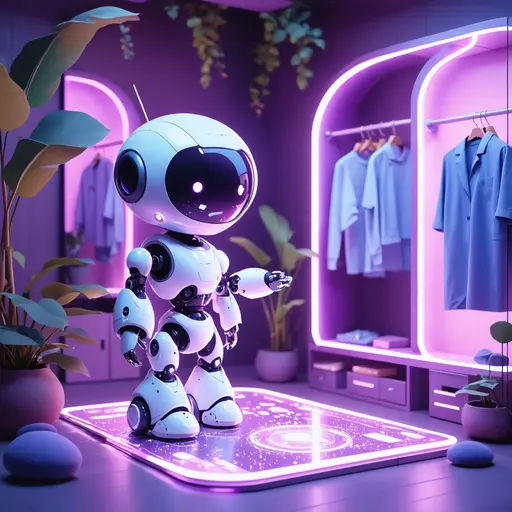
AI Agents: Fashion's New Digital Trendsetters
Ever wished you had a fashion guru on speed dial, ready to offer style advice at any hour? Well, AI agents are basically that – minus the occasional attitude and hefty price tag. These digital fashionistas are changing the game, from helping you find the perfect outfit to keeping those pesky knockoffs at bay. But before you start picturing a robot in a beret critiquing your wardrobe choices, let's break down what AI agents really are and how they're shaking up the fashion world.
Understanding AI Agents in the Fashion Industry
What Are AI Agents?
AI agents are like the Swiss Army knives of the digital world. Nathan Brunner, CEO of Boterview, explains it best: "An AI agent is software that can perform tasks, make decisions, and interact with users or systems without constant human supervision." In the fashion realm, think of them as tireless assistants who can do everything from tagging products to predicting the next big trend.
How Do AI Agents Work?
These digital fashion mavens have a unique way of navigating the online world. They "see" the web by taking screenshots and analyzing what's on the screen. Then, just like a human user, they can click, type, and interact with websites. It's like having a super-smart intern who never sleeps and can browse thousands of fashion sites in the blink of an eye.
Popular AI Agents and Their Applications
General-Purpose AI Agents
Some AI agents are like fashion generalists, ready to tackle any task you throw at them. OpenAI's Operator and ByteDance's UI-TARS are prime examples. These digital assistants can handle everything from online shopping to complex research tasks. Imagine sending your AI on a mission to find the perfect accessories for your new outfit – that's the power of these general-purpose agents.
Industry-Specific AI Agents for Fashion
Then there are the fashion specialists. Tools like Vue.ai are tailor-made for the fashion biz. They're the digital equivalent of having a team of seasoned fashion pros working round the clock. These AI agents can tag products, create virtual fitting rooms, and even help with pricing strategies. It's like having a fashion-focused supercomputer at your fingertips.
Potential Uses of AI Agents for Fashion Brands
Streamlining Product Management
AI agents are revolutionizing how fashion brands handle their product catalogs. They can automatically tag and categorize products, making it easier for both brands and customers to find exactly what they're looking for. It's like having a super-organized digital closet that knows exactly where everything is.
Enhancing Customer Experience
Virtual fitting rooms powered by AI are changing the online shopping game. Customers can now "try on" clothes digitally, reducing returns and boosting satisfaction. It's like having a magic mirror that shows you how an outfit will look without ever putting it on.
Combating Counterfeits
Fake fashion items are a huge headache for brands, but AI agents are joining the fight against counterfeits. Lacoste, for example, is using Vrai AI to spot fakes from just a photo. As Nathan Brunner suggests, "The next step would be to create an AI agent that scours the internet to combat counterfeits by scanning product images to detect fakes." It's like having a digital detective agency working 24/7 to protect brand integrity.
Trend Analysis and Forecasting
AI agents are becoming the crystal balls of the fashion world. They can analyze vast amounts of data from social media, fashion shows, and street style to predict upcoming trends. Christian Hed, CMO of Dstny, points out, "AI agents are absolutely brilliant tools for trend analysis. For example, you can use them to monitor all the top magazines in the fashion world, collect top stories of the day into an Excel spreadsheet and pull out themes from the titles." It's like having a team of trend forecasters who never sleep and miss nothing.
Challenges and Considerations When Implementing AI Agents
Balancing AI Automation with Human Touch
While AI agents can do amazing things, they're not a complete replacement for human expertise – especially in sales. Melanie DiSalvo, founder of Virtue + Vice, cautions, "While AI is great for scraping data like emails, it's not great for closing sales. When it comes to wholesale orders, 90% of the deal is the relationship." The key is finding the right balance between AI efficiency and human connection.
Addressing Accuracy and Reliability Concerns
AI isn't perfect, and there have been instances of AI-powered systems providing inaccurate information. Remember the controversy with Apple's AI venture, Apple Intelligence? It's a reminder that AI agents need careful monitoring and continuous improvement to ensure they're helping, not hindering, your fashion brand.
The Future of AI Agents in Fashion: Opportunities and Predictions
As AI technology continues to evolve, we can expect even more innovative applications in the fashion industry. From AI-designed clothing lines to hyper-personalized shopping experiences, the possibilities are endless. However, as Volodymyr Murzak, tech lead at Syndicode, wisely advises, "The trick with AI agents is to use them to solve real headaches, not just because it sounds fancy."
In conclusion, AI agents are not just a passing trend in the fashion world – they're becoming as essential as a little black dress in a well-curated wardrobe. By embracing these digital trendsetters wisely, fashion brands can stay ahead of the curve, enhance customer experiences, and streamline operations. The future of fashion is here, and it's wearing AI.